
Running a Sex Offender Check in Twin Falls County
The Idaho Central Sex Offender Registry is the official starting point. Idaho State Police manages the database, while the verifying sheriff supplies and checks local facts. Searchers can choose a known name, Twin Falls County, a city, a ZIP code, or distance from an address. Quick lists also isolate Violent Sexual Predators and records marked Non-Compliant or Pending.
Begin with the narrowest facts known, then widen the search. Use the county filter for the full Twin Falls County area, not just Twin Falls city. Compare aliases, birth date, photograph, physical traits, address, offenses, and status before reaching a conclusion. Idaho State Police states that fingerprints are the only positive way to link a person to a registry record.
For a local correction, the profile's verifying sheriff is the right first contact. Idaho State Police remains the custodian of the central database. This division helps route an address concern to the office that can check it while keeping statewide system questions with the registry manager.
Save the profile address and note the date checked when reporting a concern. That gives the Twin Falls County verifier a clear record to review and avoids relying on a screenshot with no source context.
Twin Falls County Registry Channels
Idaho provides several routes because no single search answers every question. County results support an area-wide review. The map tests proximity to one address. Status lists flag records for closer reading, but a status label does not establish a new crime.
| Channel | Best use | Main limit |
|---|---|---|
| Name | Known spelling | Name match is not identity proof |
| County, city, ZIP | Area awareness | Boundaries differ |
| Radius map | Distance from an address | Some people may not map |
| Alerts | Future moves | Not a current search |
Searching the Idaho Central Sex Offender Registry
The registry offers Adult and Juvenile choices, subject to Idaho's public-access rules. A sound Twin Falls County registry search uses more than one tool when the question involves both identity and location.
The official name-search form shows the fields before a person begins.
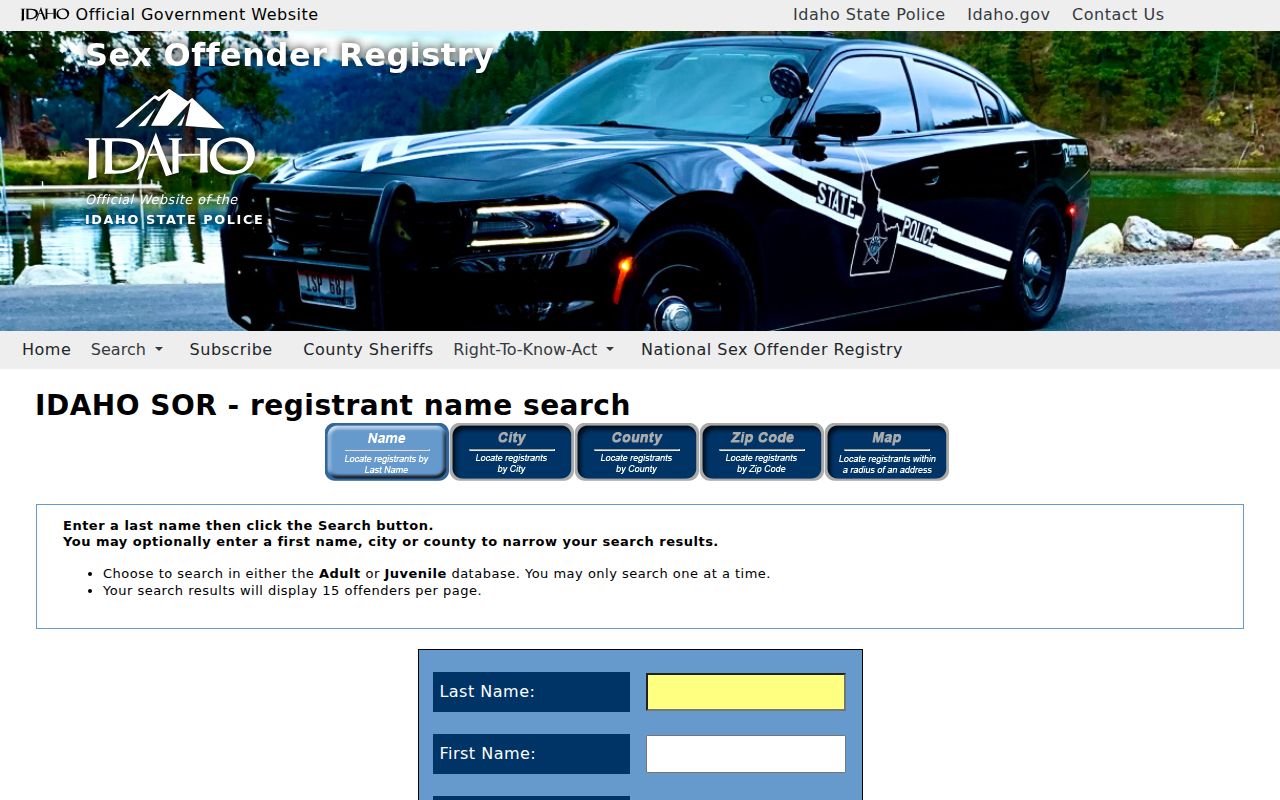
The form makes last name the key field and lets searchers narrow a Twin Falls County result without relying on a commercial data broker.
- Choose name, city, county, ZIP, map, or a quick status list.
- Enter known facts. Select Twin Falls for a county-wide result.
- Compare aliases, birth date, photograph, description, address, offense, and status.
- Report an apparent error to the verifying sheriff shown on the profile. Never confront anyone.
| Field Label | Type | Required | Notes |
|---|---|---|---|
| Last Name | Text | Yes for name search | First name, city, and county optional |
| City or ZIP | Select | Yes for that search | Adult or Juvenile option |
| Twin Falls County | Select | Yes for county search | Returns the broader county area |
| Address radius | Map | Address and city | One, three, or five miles |
Twin Falls County Radius Search
The Idaho registry map accepts a street address and city, fixes the state as Idaho, and offers one-, three-, or five-mile ranges. It helps compare a specific Twin Falls County address with public registry locations. It does not guarantee a complete list of every person who may spend time nearby.
A person without a fixed home may not plot normally. An out-of-state registrant who works in Idaho may also fall outside a residential radius. Pins are approximate. Read the profile and verifying-agency details rather than treating a map point as exact proof. Run a county search as a second view.
The official map interface displays the available distance choices.
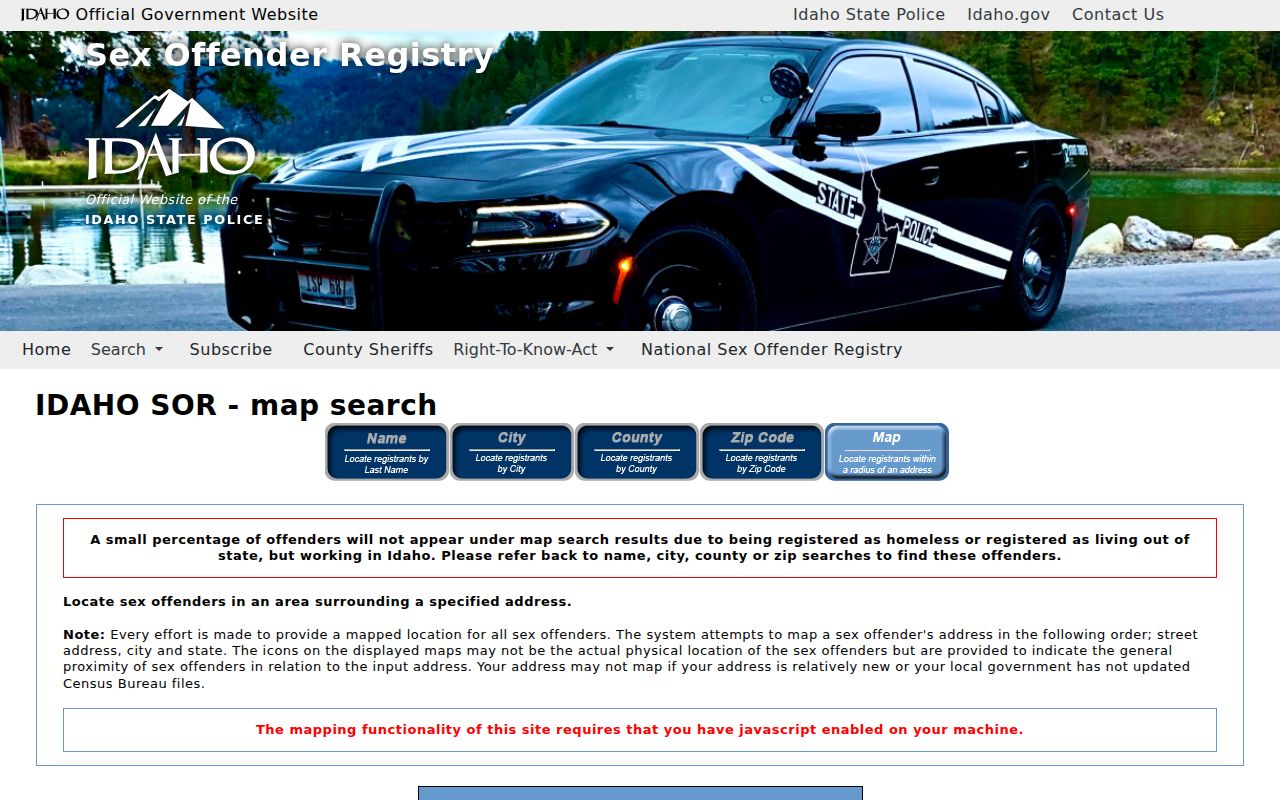
Those choices help frame a search, but the profile remains the source for the public record behind a marker.
What a Registry Profile Shows
A Twin Falls County profile combines public identity, location, offense, and compliance fields. Those details help distinguish similar names and explain why the person appears. Read the full record because a result-row status or map point leaves out key context.
The registry home and profile interface is the official source for those fields.
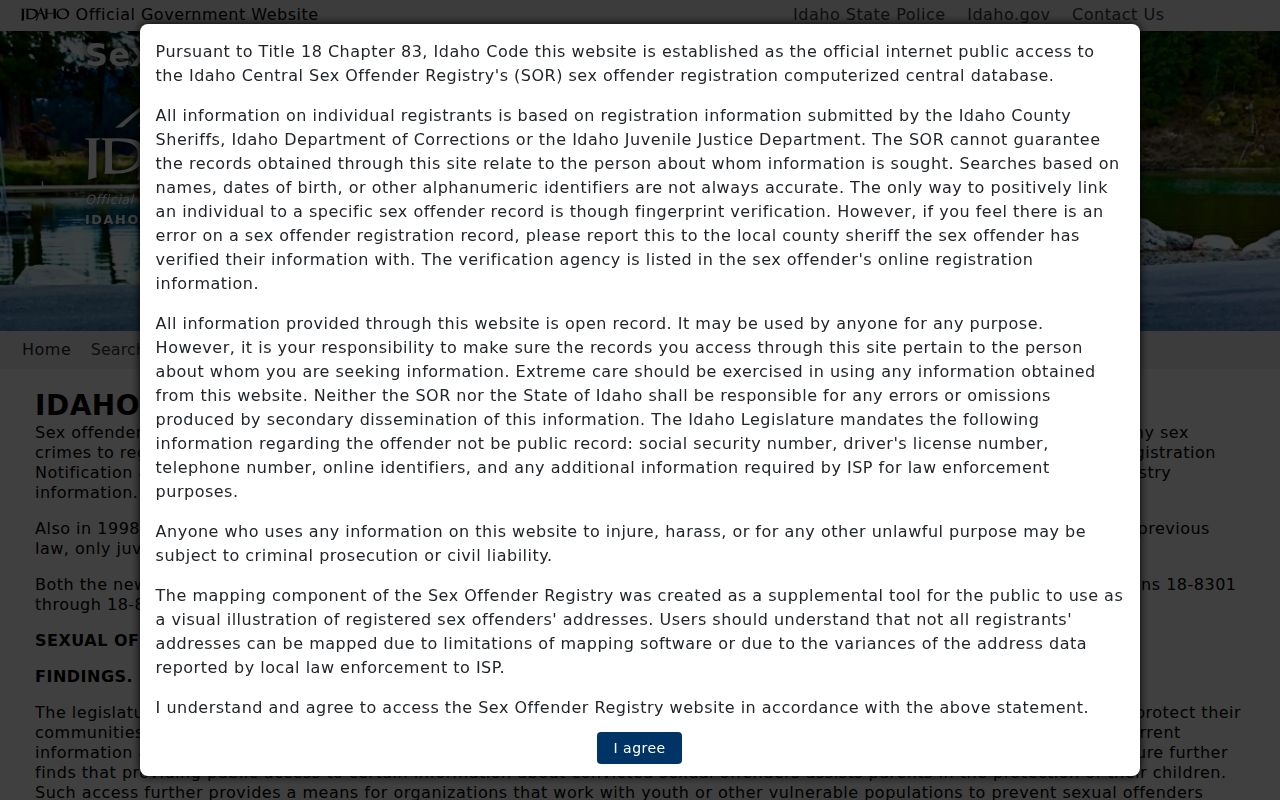
Its structured profile helps compare identifiers without republishing a private person's record here.
| Name & Aliases | Name, aliases, prior names, birth date, and KNO number |
|---|---|
| Photo & Description | Photograph, traits, marks, scars, and tattoos |
| Registered Address | Residence or habitual location, student address, and qualifying temporary lodging |
| Offenses | Registration offenses, other sex convictions, and conviction place |
| Registration Status | Compliance or location-unavailable information |
Twin Falls Registry Privacy Limits
Public access does not expose every government field. Idaho withholds victim identity, Social Security numbers, non-conviction arrests, online identifiers, passport and immigration facts, and identifying details about people who live or work with a registrant. Vehicle and phone data may exist in government files without appearing publicly.
These limits protect victims and unrelated people. They also show why a public profile is not a full investigative file. For an apparent address or status error, contact the verifying sheriff named in the profile. Central registry questions may go to Idaho State Police at 208-884-7305 or idsor@isp.idaho.gov.
Registration Requirements and Levels in Idaho
Idaho does not publish Tier I, II, and III durations. It separates ordinary registrants from designated Violent Sexual Predators. Registration begins as a life duty. Verification schedules and fees differ, and a sheriff may waive a fee for indigency. New Twin Falls County residence registration is due within two working days. After state notice, appearance is due within seven days of mailing.
| Level / Tier | Duration | Verification Frequency |
|---|---|---|
| Ordinary registrant | Life baseline; $80 annual fee | Annual |
| Violent Sexual Predator | Life; $50 first quarter, then $10 | Every three months |
| Qualifying petition applicant | Continues until court relief | Possible petition after statutory ten-year point |
Twin Falls Registry Release Petitions
Ten years does not trigger automatic removal. Under Idaho Code section 18-8310, a qualifying nonrecidivist, non-aggravated, non-Violent Sexual Predator registrant may petition district court. Time runs from release from incarceration or placement on parole, supervised release, or probation, whichever is later.
The applicant must document completed supervision without revocation, treatment, no pending qualifying matter, no later felony or sex offense, notice, and certified judgments. The court requires clear and convincing evidence, meaning highly persuasive proof. Twin Falls County duties continue unless the court grants relief.
Twin Falls County Address Alerts
The official address alert form collects street, city, ZIP, an email entered twice, and a one-, three-, or five-mile radius. It sends changes when a registrant moves into or out of the chosen Twin Falls County area.
Alerts supplement a current check. They may not account for every person without a mapped home or an out-of-state worker. For searches beyond Idaho, use the official National Sex Offender Public Website.
Lawful Use and Community Notification
Registry data serves protection and community awareness. It does not authorize harassment, intimidation, injury, property damage, or vigilantism. A Non-Compliant label describes registration status. It is not permission to investigate or confront the person. Report suspected violations through law enforcement.
Misuse is a crime. Idaho Code section 18-8326 allows up to one year in county jail, a fine up to $1,000, or both for specified criminal misuse.
Idaho's 500-foot school and day-care rules include exceptions and grandfathering under section 18-8329. Do not reduce the law to an exceptionless ban. The statute and actual status control. Preserve the profile link and contact law enforcement when a safety concern arises.